

Introduction
Which digital marketing channel should you start with if your team only has so much time, money, and effort to invest? The most effective answer will not be everywhere. Which channels have an audience that fits your target customer and can help you achieve a specific goal — like driving leads, sales, bookings, or newsletter sign-ups?
Testing initiatives outside your first marketing channel can quickly distract you from what works. Instead, narrowing your focus on one digital marketing channel will help you see how your customers react. Then it will be easier to decide whether you want to scale your efforts and spend more on that marketing channel.
SEO, social media, advertising, email marketing, video, and many other marketing channels can fit your business needs. But which of these digital marketing channels will be the most effective for you? Everything depends on your customers’ preferences, the products or services you sell, the skills of your team, and how quickly you want to see results
Start With Customer Evidence
A popular marketing channel is not necessarily the one right for your business — your customers do not frequent the same places your competitors, the gurus in your industry, and your own internal marketing team do. Before choosing the channels to invest your time and budget in, take a step back and evaluate the evidence you already have.
Customer evidence can be provided through sales conversations, website analytics, testimonials, customer service inquiries, referral sources, search research, and social media. The ultimate goal is to find out how your prospective customers find new products and services, research and compare different offers, and make their final decisions.
Find Where Customers Look for Answers
Start by reviewing where existing customers first heard about your company. Ask your sales team which questions prospects ask during calls. Check your customer relationship management system, contact forms, and onboarding surveys for referral data.
For example, a local plumbing business may discover that most new customers search Google for urgent terms such as “emergency plumber near me.” In that case, local SEO and Google Search Ads may be strong first-channel choices.
A B2B software company may find that potential buyers first learn about the problem through LinkedIn posts, industry webinars, peer recommendations, or educational blogs. That business may benefit more from LinkedIn content, lead magnets, email nurturing, and SEO-focused educational content.
Ask customers questions such as:
- How did you first hear about us?
- What problem were you trying to solve?
- Where did you look for information before buying?
- Which websites, social platforms, or people did you trust?
- What made you choose us instead of another option?
The answers can reveal more than basic demographic data. They show the path your customers take before they become leads or buyers.
Separate Discovery From Purchase Intent
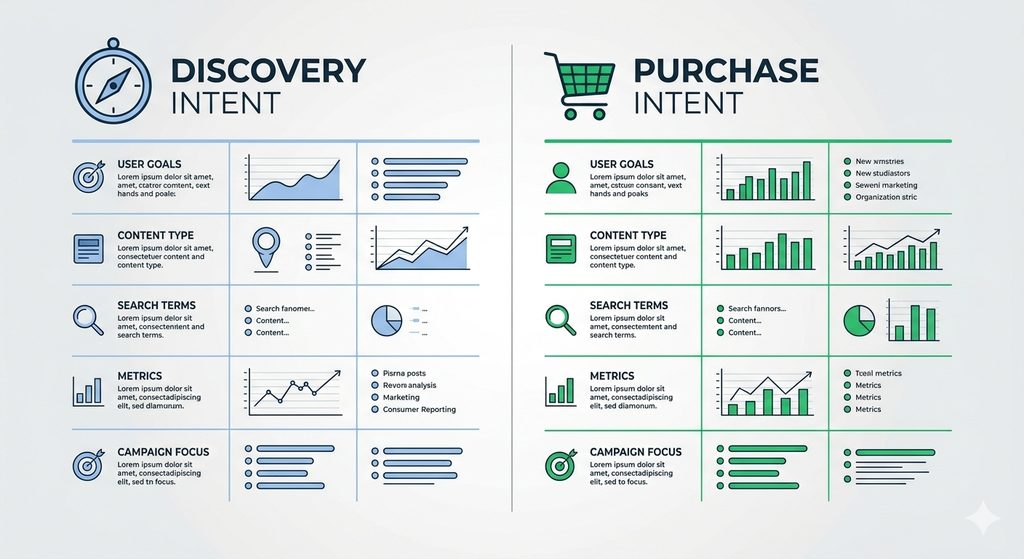
Not every visitor on your landing page is prepared to buy at the first visit. Some customers already know what they need and are looking for solutions to their problem. However, some are just in the early stages of their decision-making process and do not yet understand the problem, the solution, and the value of your offer.
The search marketing campaigns should primarily target the first group of customers with purchase intent. Those who search about solutions, products or services similar to what you offer have already identified their needs and are looking for suppliers. Queries like “best accounting software for small business” or “roof repair service near me” are examples of searches that yield the most traffic and conversion opportunities.
While browsing through your favorite social media platforms, such as LinkedIn, Instagram, YouTube, or Facebook, you might not be in the buyer persona. Still, you may get hooked by an article or video that can solve a pressing problem you did not know how to solve before. Thus, discovery marketing is also a powerful tool to engage with your target audience at different stages of their journey.
It is always a good idea to have both types of marketing in your campaign mix. However, when you are just getting started, it makes sense to prioritize the channels that allow you to get the most out of each visitor’s visit.
Identify What Customers Trust
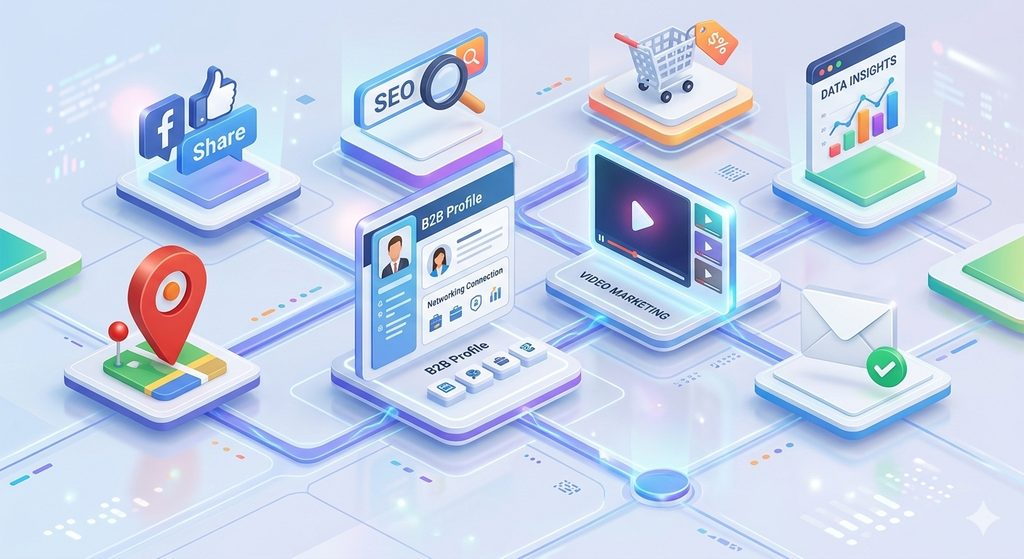
Consumers do not place the same amount of trust across channels. A consumer shopping for a local service might trust Google reviews and map listings. A business owner shopping for an involved service might trust case studies, articles, webinars, and peer recommendations. And a consumer might discover a brand on a short-form video, creator, or in a community.
Look at what channels your customers are trusting for similar purchases.
- Search engines for high-intent research
- Google Maps and review sites for local decisions
- LinkedIn for B2B information and credibility
- YouTube for learning and discovery
- Instagram or TikTok for visual discovery and consumer purchases
- Email newsletters for ongoing engagement
- Communities, forums, professional groups, and clubs for word-of-mouth
Do not select a channel just because it is popular or because your competitors are there. Choose based on what you know to be true about your buying audience and their journey.
Match the Channel to Your Goal
Every digital marketing channel can drive multiple business goals, but your first test campaign should be focused on a specific objective. If you don’t define a meaningful metric, it can be easy to get caught up celebrating vanity metrics (such as likes, clicks, views or followers) not knowing if your marketing is actually delivering value to your business.
Define what matters to you before launching any test campaigns.
Choose Search When Customers Need a Solution
Search is frequently the most effective channel to target when customers are in the process of finding a product, service, or provider. Google Search Ads can provide useful insight quickly as you can control your budget and target specific terms.
For instance, an accounting agency may want to test which terms drive engaged users to request a proposal by targeting variations of “tax accountant for small business” or “business tax filing help.” A local gym could try “personal trainer near me” or “beginner fitness classes” to gauge interest.
With paid search, you can test:
- What terms have qualified traffic
- What offers persuade site visitors to contact you
- What landing pages perform best at turning visitors into leads
- How much you spend acquiring a lead or sale
- If there is demand for a specific product or service
SEO is also helpful for search, but it typically takes longer to yield results. SEO is most useful when there is a steady supply of evergreen content that targets common customer questions and concerns. It is still a powerful marketing channel, but it is not ideal for testing.
Choose Social Media When Discovery Matters
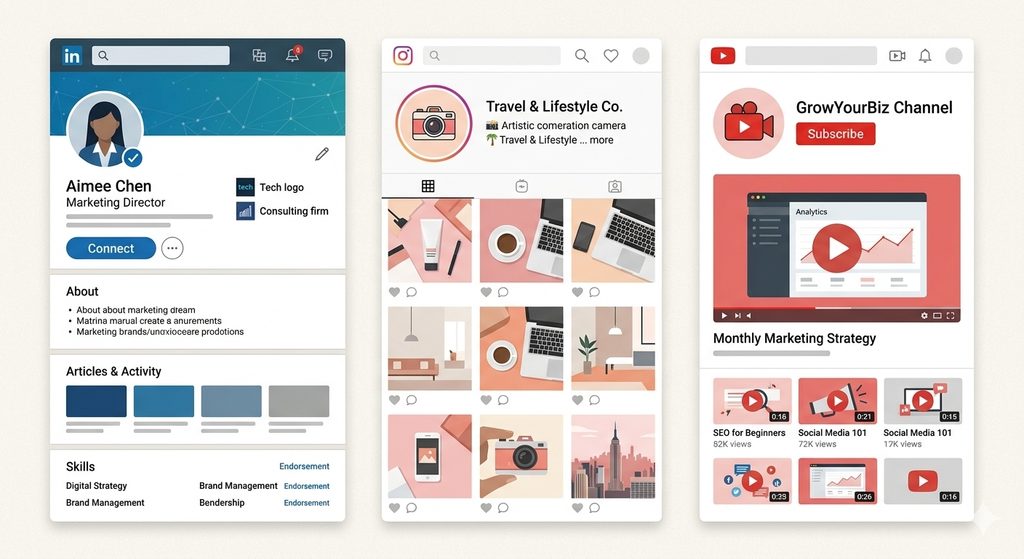
Social media can be a great channel to drive leads by capturing your audience at the very beginning of the customer decision journey—before they even know what they need. It is good for brand awareness, conversation, personality, and experimentation. At the same time, it is important to note that social media is not a catch-all; it is not a channel where one can randomly post any content. One has to choose strategically which platforms to use and invest time in
Here is a brief guide:
1. Ask yourself what your audience is, and what products/services you offer. Use these two criteria to select social platforms for your business.
As a general rule:.
- LinkedIn is great for B2B services, consultants, software, recruiters, and professional services.
- Instagram is good for consumer products, visually appealing items, food, beauty, and local experiences.
- YouTube is the best platform for video content creation, including educational content, product reviews, unboxing videos, and how-to guides.
- TikTok is also a popular platform for video content, but it is more entertaining and requires a different creative approach.
- Facebook is suitable for local communities, groups of people with similar interests, and some consumer products/services.
2. Always keep the lead magnet in mind when publishing content. What should the audience do next? This could include visiting a page, scheduling a consultation, downloading a PDF guide or white paper, subscribing to a YouTube channel, or signing up for a newsletter.
Choose Social Media When Discovery Matter
Choose Email When You Have an Audience to Nurture
Email marketing is one of the best channels for lead nurturing and retaining customers as it allows direct communication. However, email as a marketing channel is most useful when there is a pre-established permission-based audience.
This is why email marketing is great for:
- Onboarding new subscribers.
- Reminding leads after they downloaded a guide.
- Educating the prospects before a sales call.
- Announcing a limited-time offer.
- Announcing a new resource, product, or research.
- Driving repeat purchases.
- Nurture inactive customers.
For example, a service company can design an email sequence to onboard a lead, walk them through the most common problems, introduce their solution, share testimonials, and schedule a discovery call. At the same time, an e-commerce company might want to send emails with related products, restocking announcements, reviews, and special offers.
The bottom line is that you want to give subscribers a good reason to remain engaged and continue receiving your emails; otherwise, there is a high chance that your messages will get marked as spam.
Consider Cost, Skills, and Time
The best marketing channel is the one that is suitable not only for your audience but for your resources. You can not choose poorly managed options only because they seem attractive.
Compare and Contrast Budget vs. Time Expenditure
The paid option teaches you a lot quicker but requires more expenditures on ads. In other words, you will most probably invest more money before finding the right keywords, audience, message, and landing page.
At the same time, creating quality content requires more time. One should write articles or blog posts, record and edit videos, make illustrations, reply to comments, and do other time-consuming tasks.
It would be a good idea to prioritize and choose between two mutually exclusive options:
1. The paid search marketing option teaches you what works and what not quicker but requires a larger initial investment.
2. The organic options such as SEO, content marketing, and social media require more time but are safe in terms of budget.
You can also rely on your experience and the given circumstances to pick one of the following two exclusive options:
• SEO and content marketing are sustainable and affordable but require more time and continuous improvement.
• Paid search and social media ads (especially those that use targeting) give quicker results but are more expensive in the long run.
Match the Channel to Team Strengths
Your internal skills matter. You may have a team of stellar writers who are perfect for blogs, SEO, emails, and thought leadership, but a team skilled in video creation would struggle with YouTube, Instagram Reels, or TikTok. A team with exceptional analytics and conversion skills would be excellent at managing paid social media campaigns.
Think about what your team can commit to on a weekly basis.
SEO and content creation require keyword research, blog posts, article optimization, and updates. Social media requires graphic design, photography, video creation, scheduling, and community management. Paid social media ads require tracking, keyword research, creative testing, landing page optimization, and budget tracking. I encourage you to think strategically and choose the channels that will grow your business versus what looks exciting. You also need to have a realistic idea of what you can do consistently and what you can execute excellently.
Ensure Your Offer Fits the Channel
A marketing channel cannot fix a confusing offer. Before promoting your offering, make sure the potential customers can understand what you are promoting, who is it for, what is it about, and what they have to do next.
A simple product with clear pricing can be promoted through a direct ad that leads to a purchase page. But a complex B2B service will require a more involved marketing chain that involves guiding the prospect through a discovery, case study, webinar, consultation, or email marketing before actually getting them to purchase
.
Your channel, message, offer, landing page, and follow-up must fit together.
How to Choose Between SEO, Paid Search, Social, and Email
Each one is right for a different kind of business need. It all depends on your audience, offer, goals, and resources.
Use SEO and Content for Ongoing Questions
SEO and content marketing are great for answering recurring questions and providing relevant information for comparisons, guides, product research, and problem-solving. After all, an informative article, service page, or FAQ can continue drawing traffic and engagement long after publication.
The main idea is to provide content that answers questions and satisfies search intent. For instance, a digital marketing agency can publish content about choosing the right marketing channels, SEO vs. Google Ads, or ROI measurement. The same approach can be applied by a law firm that provides answers to questions about particular legal matters customers are inquiring about.
Finally, make sure that the content you provide is actually useful. Avoid low-quality articles that are created solely for the sake of SEO and satisfying Google’s requirements. Instead, create helpful guides and pages that will answer any questions and help a visitor take the next step toward finding a solution.
Use Paid Search for High-Intent Testing
Use Paid Search for High-Intent Testing Paid search is a great option if your customers have a clear idea of what they are looking for and can describe their needs in keywords. It allows you to test your offer, headlines, value propositions, and landing pages’ effectiveness on real traffic.
Instead of thinking about how many people saw your ad, focus on the conversion rate, cost per lead, quality of leads, and how many website visitors called and became paying customers. These metrics will show your ad’s real-life effectiveness and help you get maximum value for your budget.
Remember that using a small set of very similar keywords is usually more effective than trying to target an entire market. This approach will help you learn which verticals and specific offers are the most profitable for you. And you will not waste the budget on irrelevant long-tail keywords.
Use Email for Relationships and Retention
The email marketing channel is perfect for nurturing relationships after the point of sale. It helps retain customers, get them to use the product, and convince them to come back and buy again.
A basic email sequence could look like this:
- A welcome email,
- an email with useful information or an article,
- a testimonial or a use case,
- an explanatory email about your offer,
- and a call-to-action email to set up a call or make a purchase.
Your email marketing will perform better if it is personalized and relevant to what the customer is looking for at a given time and stage of their journey.
Run a Focused Marketing Channel Test
Now that you’ve identified a channel, it’s time to test it. Don’t test multiple channels, multiple audiences, and multiple offers. A single test will tell you what influenced the outcome.
Set One Primary Outcome
Set a primary outcome to determine the success of your marketing initiative. It should depend on the value that the customers acquired through your campaign. According to your field of work, the primary outcome may be
- qualified leads,
- sales,
- consultations booked,
- demo requests,
- store visits,
- email sign-ups, trial closures, or
- repeat purchases.
While the number of clicks, impressions, and likes is important, they indicate only the volume of engagement. At the end of the day, any marketing campaign should bring high-quality leads and profit to the business.
Establish a Baseline
Before launching a test, document the outcomes of the previous month or quarter. For instance, establish how many leads you usually get, the conversion rate, the average deal size, or the cost of a new lead.
Setting a baseline will help you understand the value of the test. If you got 20 new leads, it is a good outcome only if you know how many leads you used to get before launching the campaign.
Set a Time and Budget Limit
Define how long the test should run and how much time or money you will dedicate to it. The paid campaign can run for several weeks, whereas the SEO content test might require months before you see significant improvements in rankings.
Set a success threshold – think about the point when you may decide that the tested method is worth further investment. For instance, you may want to continue running a paid ad campaign if it acquires enough qualified leads at a price you are willing to pay. Alternatively, you may want to continue SEO efforts if the pages you optimized begin to appear in the search results and gain traction gradually.
Change One Big Variable at a Time
If you change everything, your audience, your offer, your ad copy, your landing page, your budget, and your keywords, you have no idea what worked or didn’t. Keep it focused and keep the variable that you are changing. You could do the following
- One audience
- One offer
- One landing page
- One set of keywords
- Two versions of ad copy
- One call to action
Make sure you document everything you did and the learning’s you have gained which creates a repeatable process. Instead of guessing, you now have a proven process that you can test again and again.
Common Mistakes to Avoid
Many companies make a mistake when selecting the first channels to enter because of the wrong strategy.
Avoid such mistakes as:
- launching the company on all social networks at once,
- measuring performance only in likes, followers, and website traffic,
- running advertising campaigns before developing an offer page and a landing page,
- waiting for SEO to show results,
- launching based on popularity rather than customers’ needs,
- stopping the campaigns too soon and not collecting statistics,
- not collecting the quality of leads but only counting filled forms,
- and not contacting the leads.
A digital marketing channel should organically cover all stages of the customer’s journey from discovery to conversion and post-purchase interaction.
Conclusion
The right first digital marketing channels are those that best fit customers’ discovery needs, contribute to the nearest business goals, are compatible with the company’s resource capacity, and have a clear metric of success. SEO, paid search, social media, email marketing, and content marketing are all effective ways to attract customers, but each has its own purpose.
Therefore, it is critical to determine the customer’s persona, prioritize their search channels, set realistic goals for each of them, allocate resources, and measure the results against these goals to find the next best thing to do. The most important point is to choose the most relevant marketing channel for the identified customer segment rather than try to cover everyone at once.